The secret meaning (and love story) behind the Princess of Wales’s tiara
- Publish date
- Friday, 5 Dec 2025, 9:36AM

Leave it to the Princess of Wales to deliver a wow fashion moment in the same week as the Fashion Awards and an A-list Chanel show.
Catherine chose a sparkling blue Jenny Packham gown for the state banquet in honour of the President of the Federal Republic of Germany, Frank-Walter Steinmeier, and his wife, Elke Büdenbender, at Windsor Castle on Wednesday evening.
A new addition to the Princess’ collection, it featured an asymmetric neckline and cape-like sleeves. It was completed by earrings from the late Queen’s collection, along with the Grand Cross of the Royal Victorian Order (GCVO) sash and star.
We know that Catherine’s ensemble is about more than formal evening grandeur. Every element of her look is a deployment of soft power, and is as valuable to the state visit package as the seating plan, the menu, the speeches and so on.
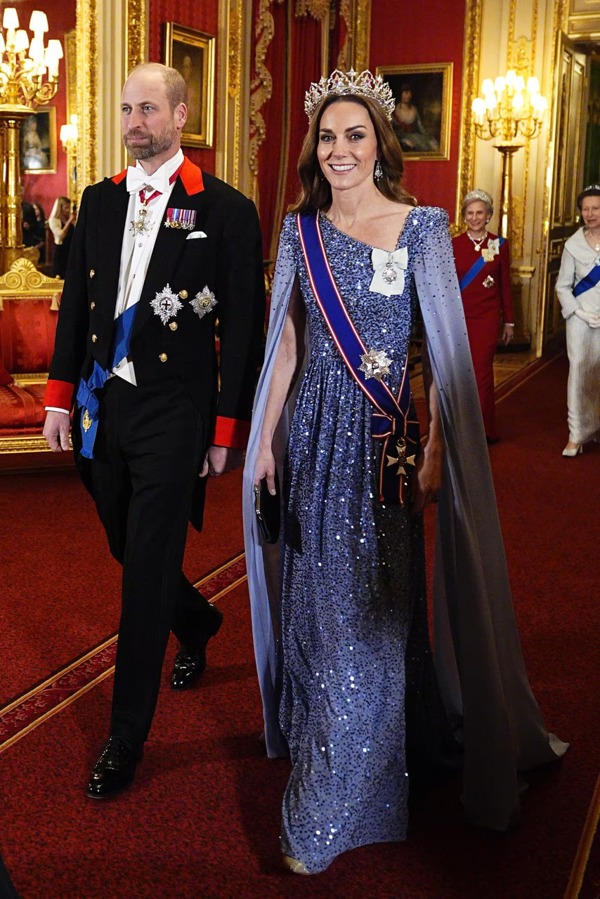
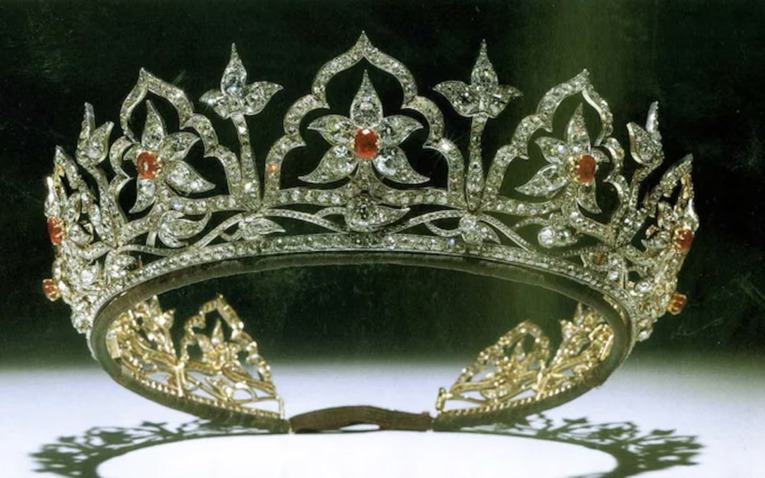
So while the gown was a showstopper, the most significant detail in her look was the tiara – Queen Victoria’s Oriental Circlet.
It’s the first time Catherine has worn the headpiece, which was designed by Prince Albert for Queen Victoria.
Albert, of course, was German, and the tiara one of many tokens of his love for the monarch. The Princess’ decision to wear it is likely intended to symbolise and celebrate Anglo-German relations.
The tiara was created by Garrard in 1853, and Albert’s design was inspired by the arch and lotus motifs in jewels presented by the East India Company at the Great Exhibition in 1851.
It was originally set with opals, one of his favourite stones, along with 2600 diamonds. Those opals were later replaced with rubies by Queen Alexandra, who believed opals to be unlucky.
Queen Victoria referenced her husband’s design talent in her diary in 1843, writing, “Albert has such taste and arranges everything for me about my jewels”.
“The Princess is more conscious than ever of balancing a modern sensibility with nods to royal history and the continuity of a long lineage, which she and her husband represent,” observes Bethan Holt, Telegraph fashion director and author of The Duchess of Cambridge: A Decade of Modern Royal Style.
“She rarely wears new tiaras, so it feels especially significant that she’s chosen the Oriental Circlet, perhaps as a reference to Queen Alexandra once wearing it on a state visit to Germany.”
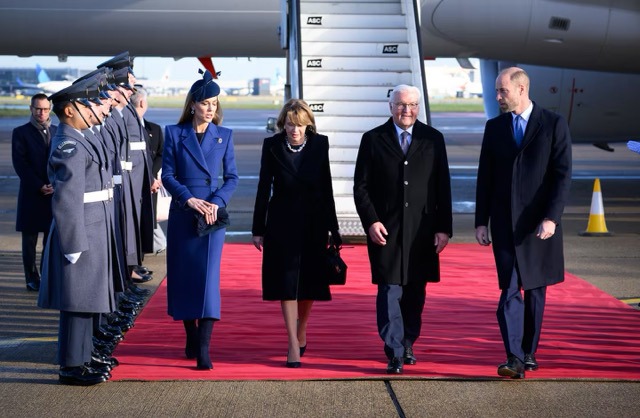
The almost violet shade of her dress was thoughtfully chosen too. It continues a blue theme from earlier in the day, when she greeted the visiting dignitaries in a blue Sarah Burton for Alexander McQueen coat. It’s thought that Catherine and the Queen were nodding to “Prussian blue”, which is said to have been created by accident in 1704 by Berlin-based colourmaker Johann Jacob Diesbach.
Catherine is once again flying the flag for British fashion in choosing a Jenny Packham gown. And it’s important that she does: fashion is worth £60 billion ($139b) to the British economy and she has the capacity to put it on a global stage just as effectively as Monday’s Fashion Awards – if not more so.
“[The gown] has the major wow factor which Jenny Packham is so brilliant at delivering,” Holt says.
“It’s Catherine’s first time wearing Packham – once one of her regular inner circle of designers – in quite a while. The cape and sequin details are quintessential Packham, the result is spectacular and really delivers the Princess effect which state banquets calls for.”
As for flattering the visiting nation, she’s already covered this in style terms – choosing a gown by the Munich-based label Talbot Runhof for the Royal Variety performance last month.
Co-founder Adrian Runhof admitted he had no intel on whether anyone else would wear his designs during the visit, although Budenbender has worn Talbot Runhof in the past.
“In Germany, people are very discreet, especially in politics,” he told The Telegraph.
Her Majesty, the Queen, looked resplendent in a green lace evening gown by Fiona Clare, the Girls of Great Britain and Northern Ireland Tiara, diamond earrings, an emerald and diamond necklace and The Order of Germany Sash.
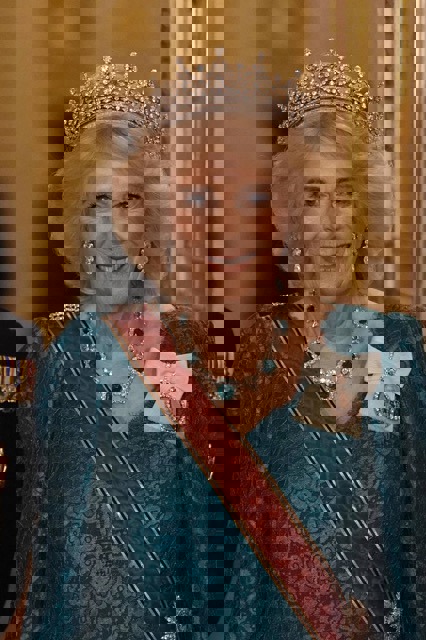
Queen Camilla’s tiara was also sensitively chosen to pay homage to the late Queen. Also designed by Garrard, the Girls of Great Britain and Ireland tiara was originally given to Queen Mary, as a wedding gift in 1893. Mary, in turn, gave it to her granddaughter, the then-Princess Elizabeth, when she wed Prince Philip in 1947.
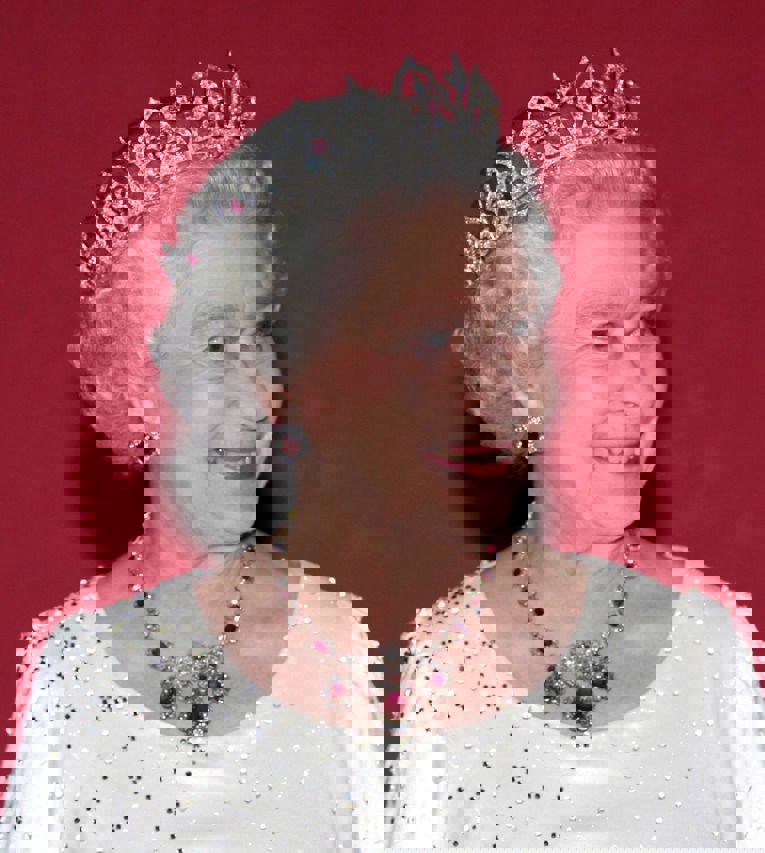
It became the late Queen’s most frequently worn tiara, it’s thought that this was in part because it was light and comfortable to wear. It is particularly familiar as it is the tiara worn in her 25th birthday and coronation portraits, as well as on British banknotes and coins.
This article was first published by the NZ Herald and is republished here with permission.

Take your Radio, Podcasts and Music with you